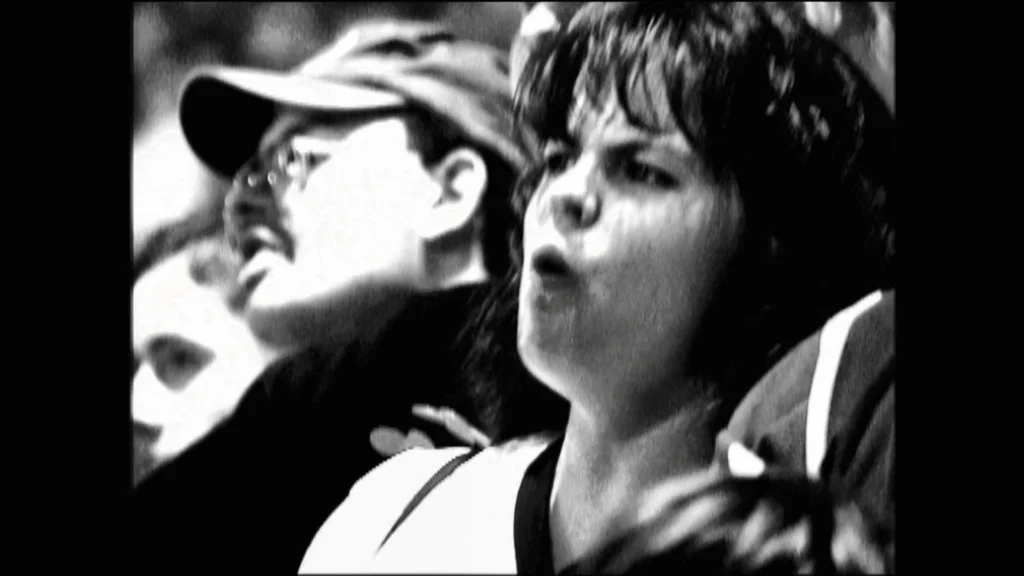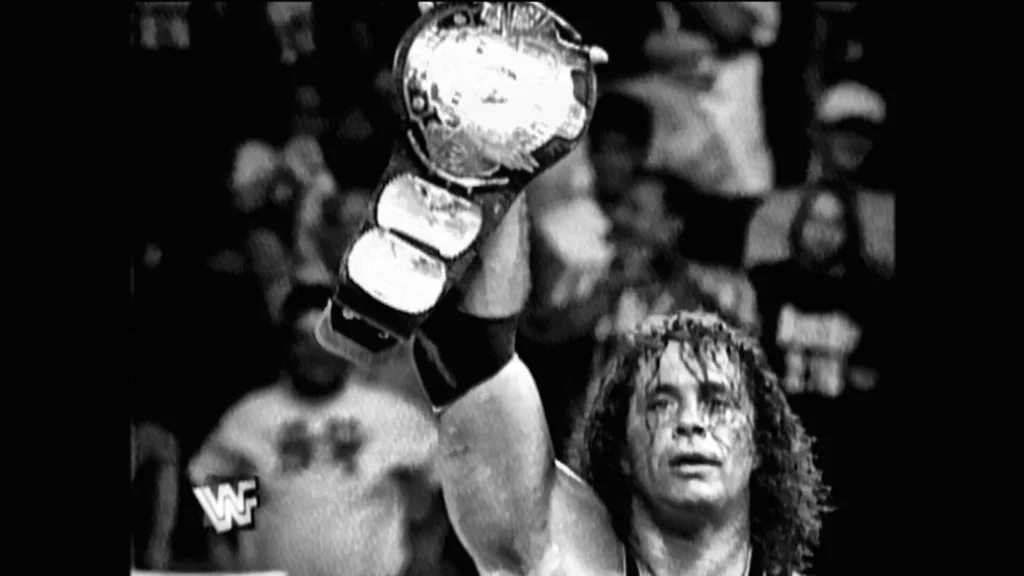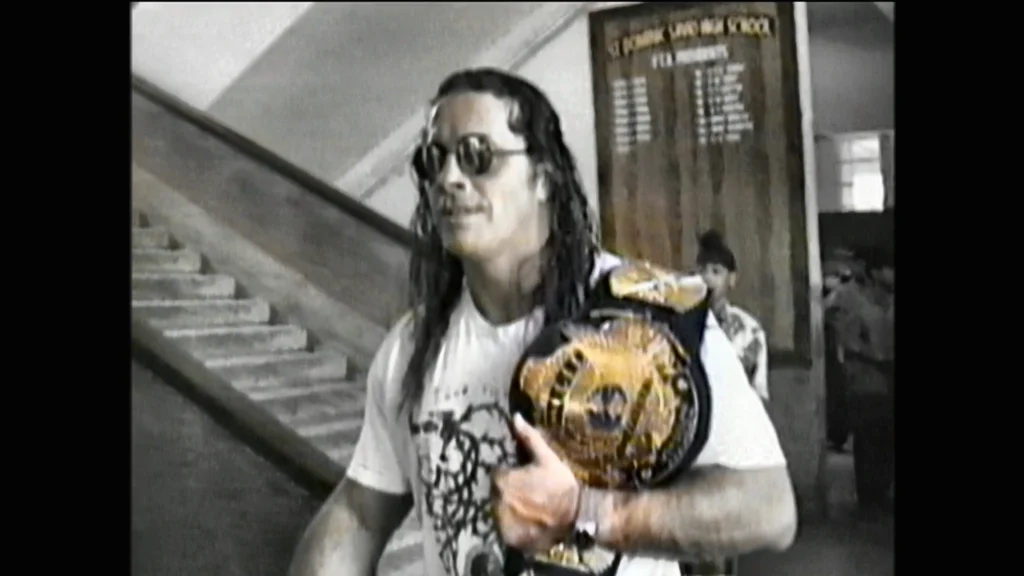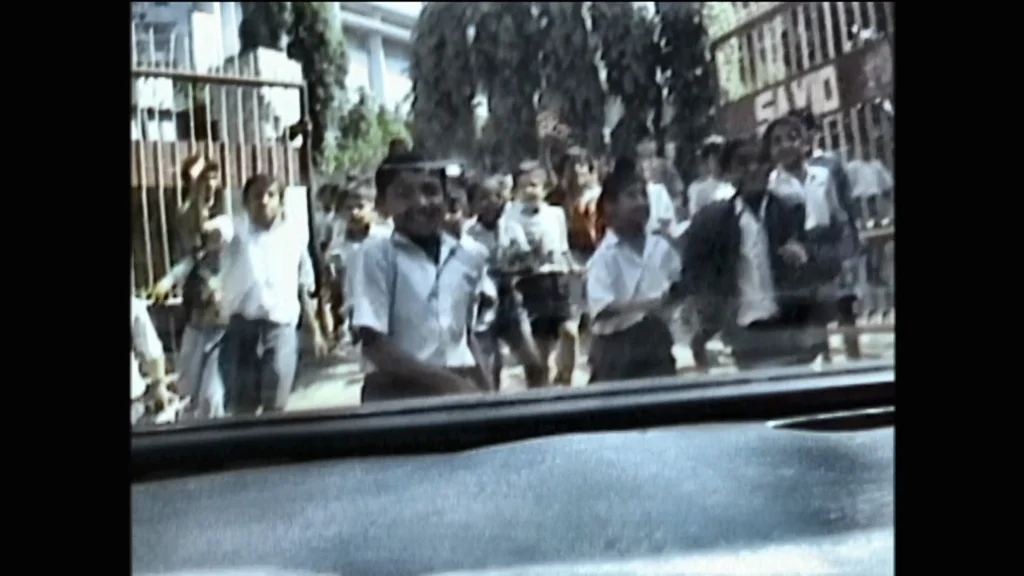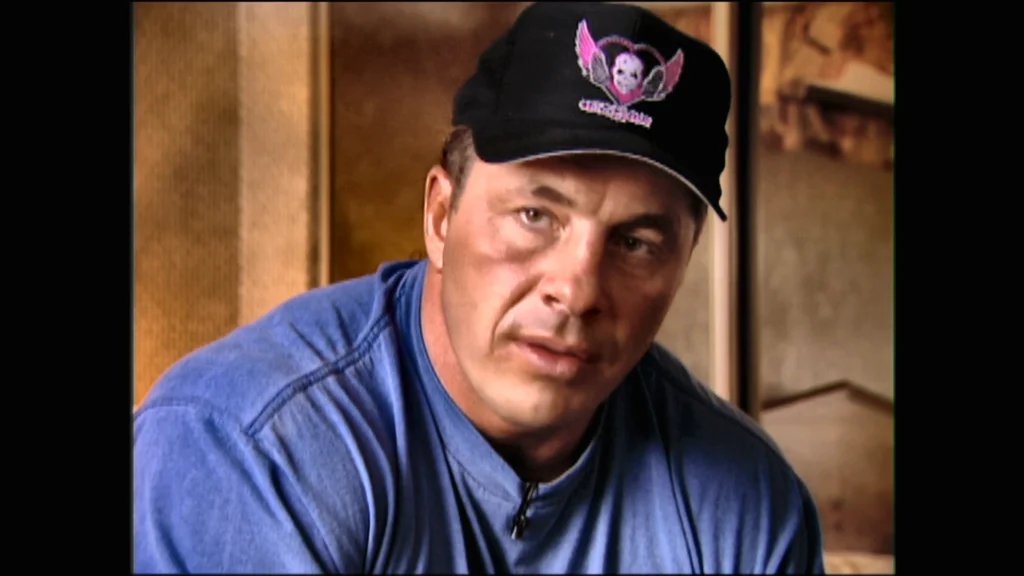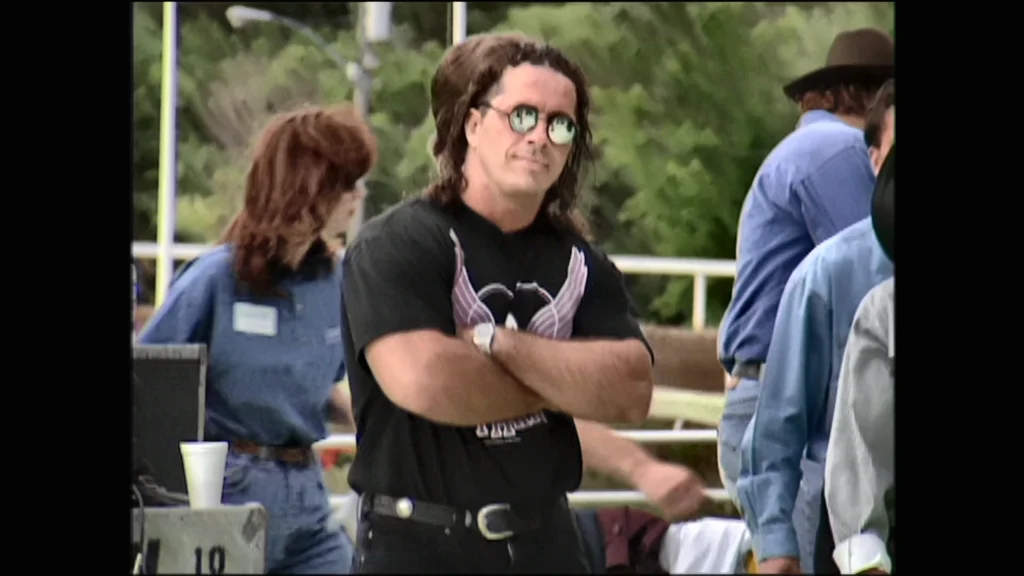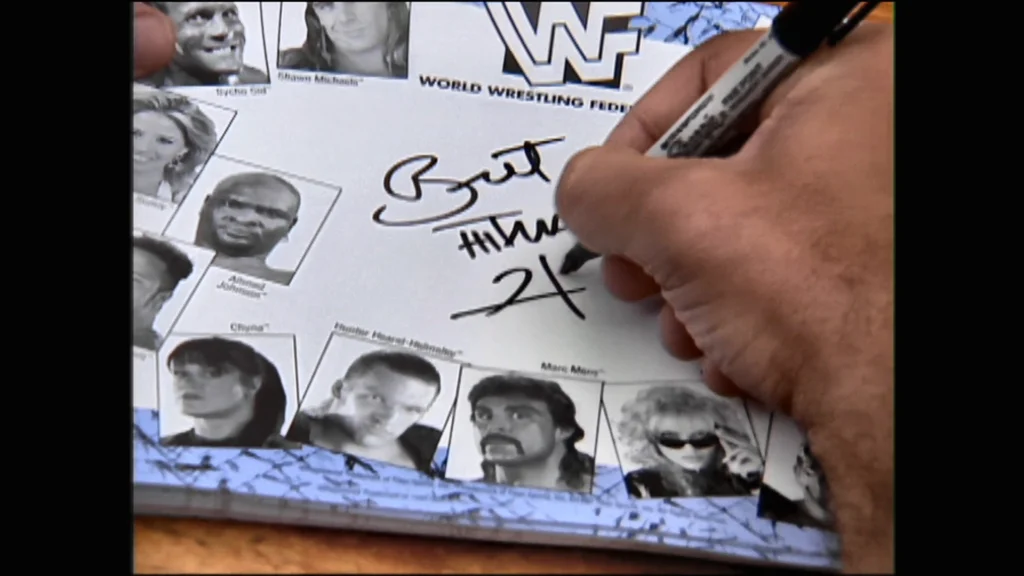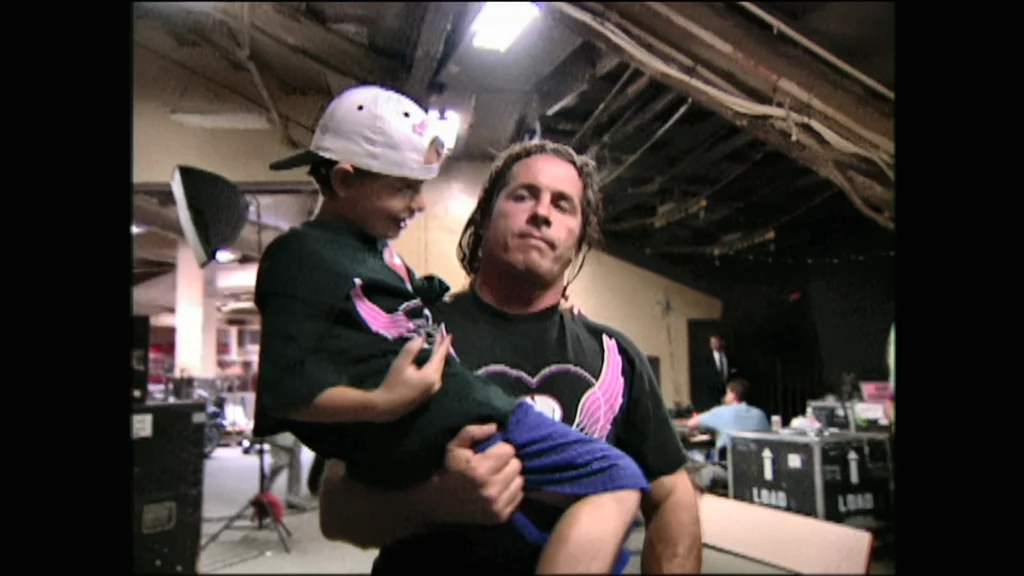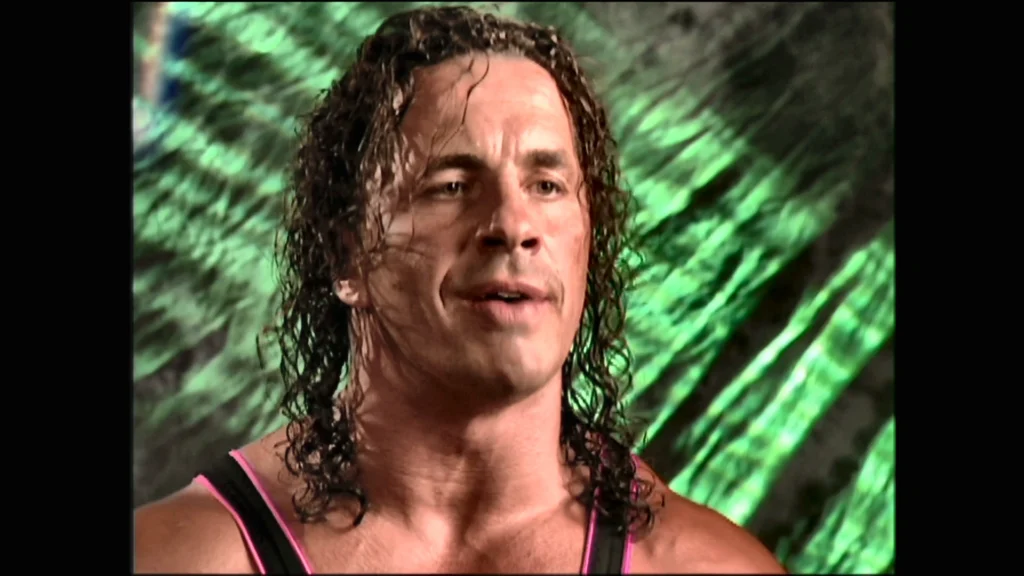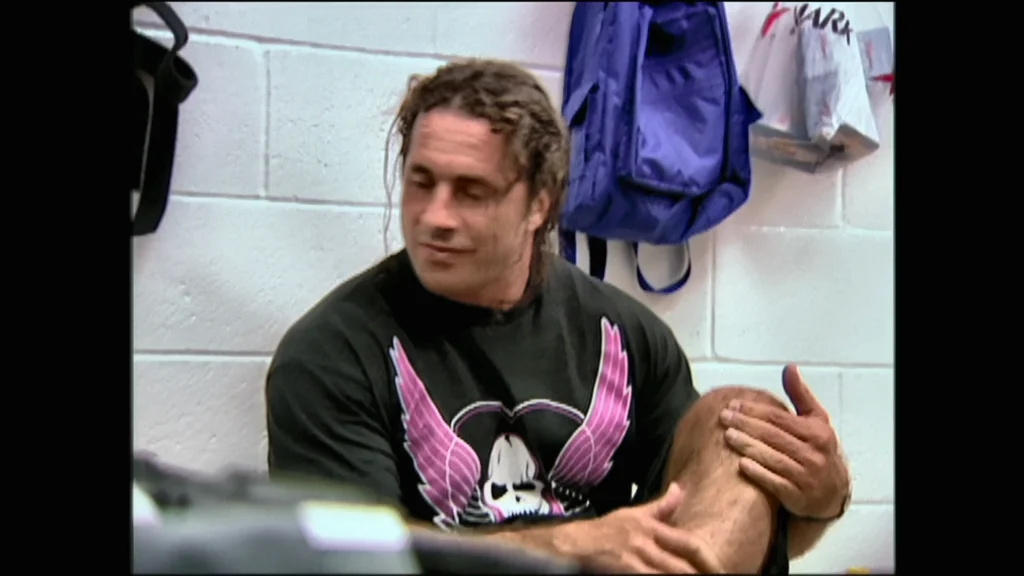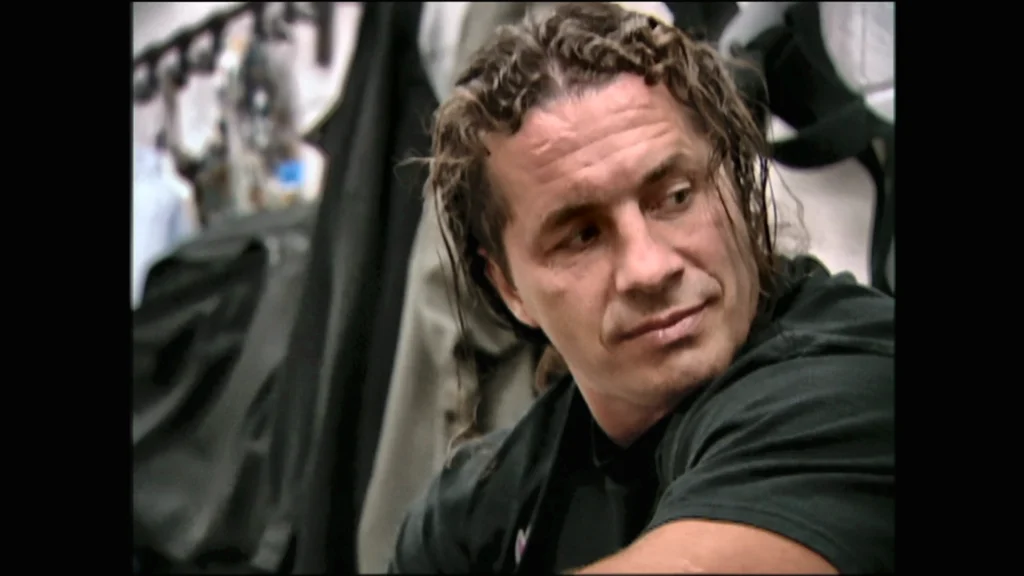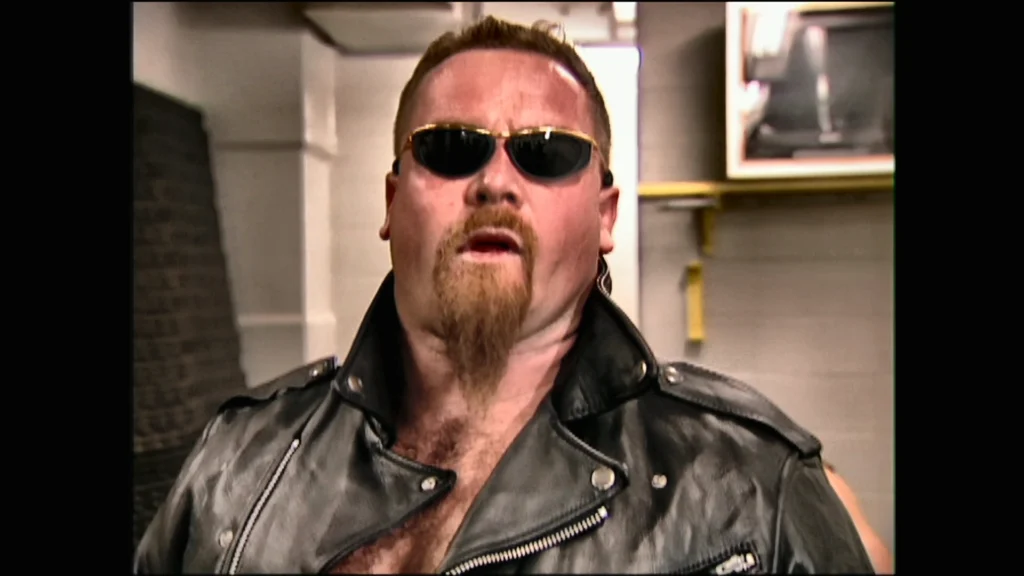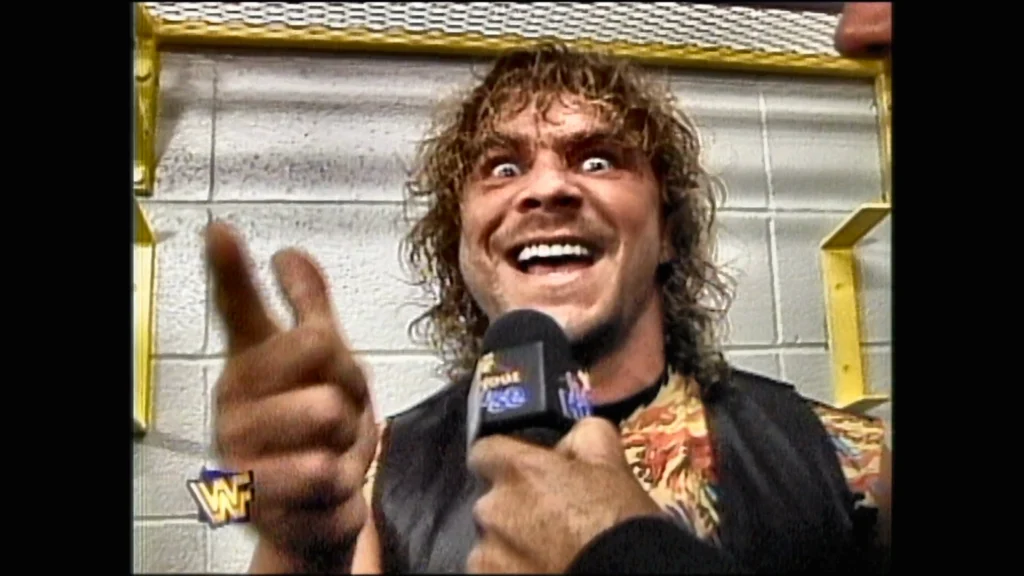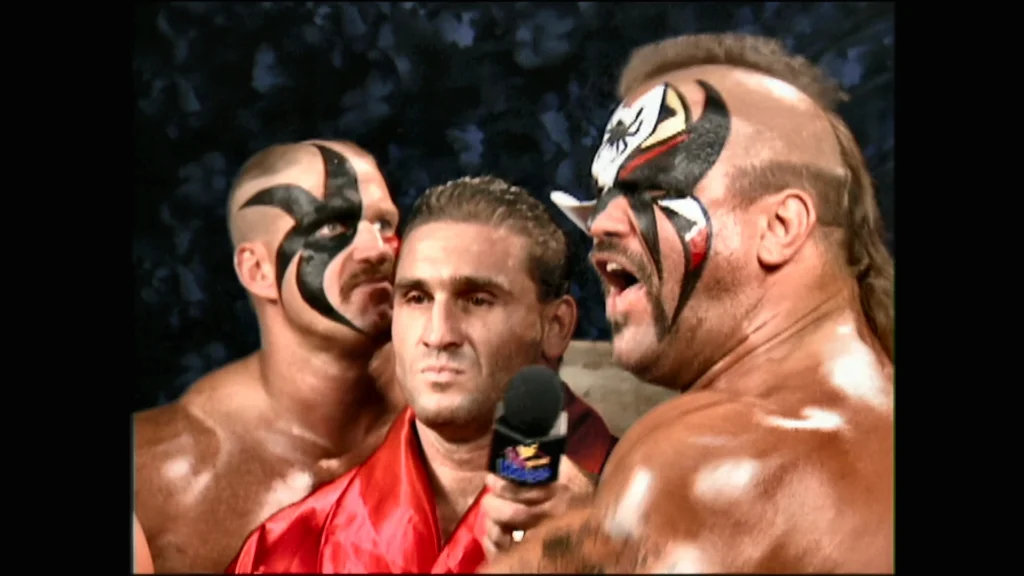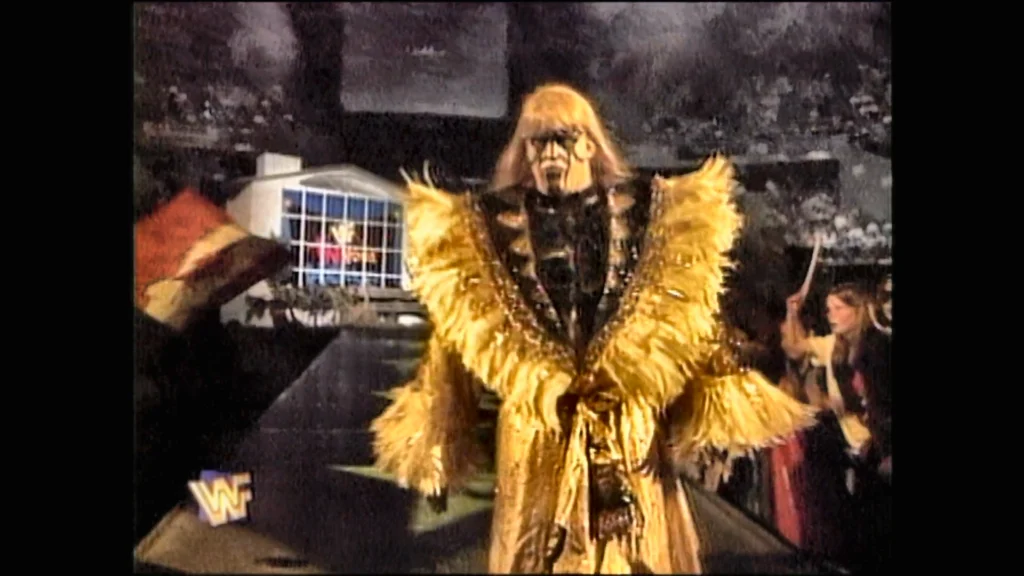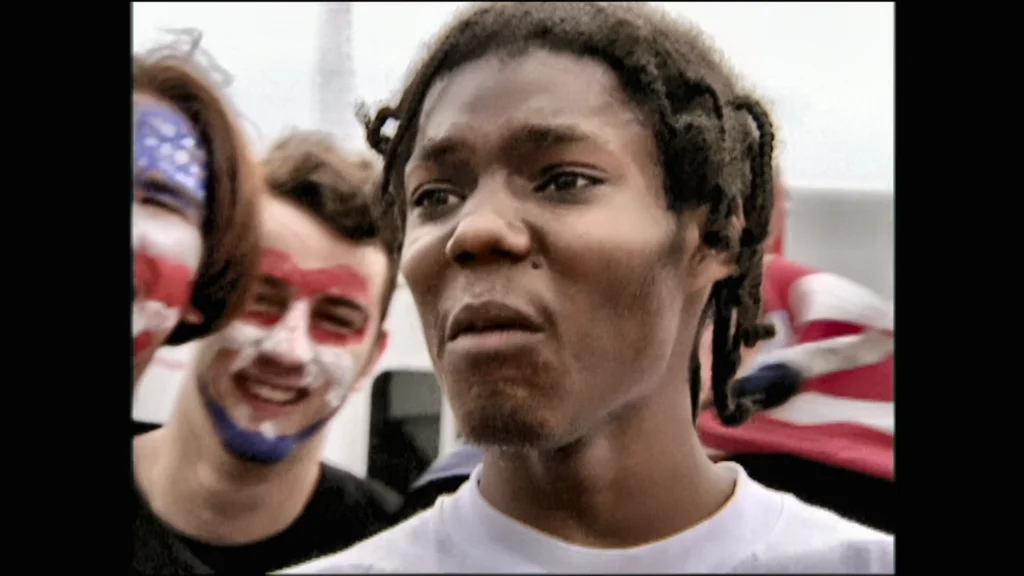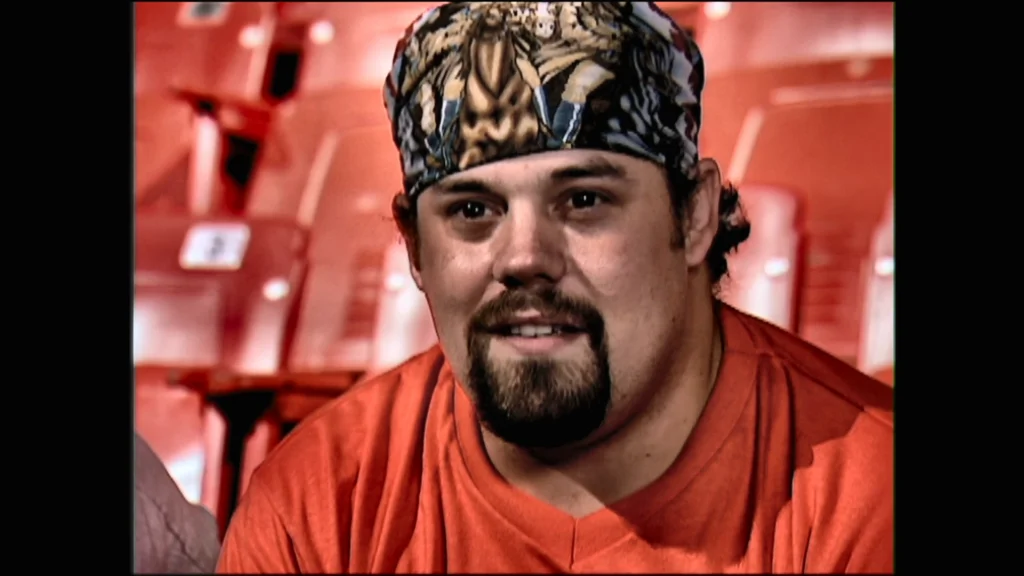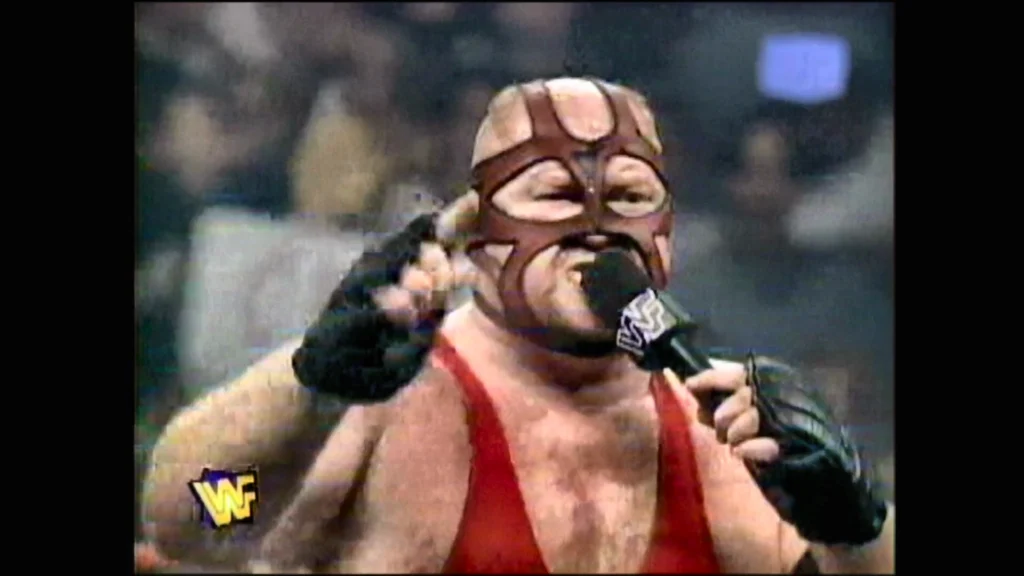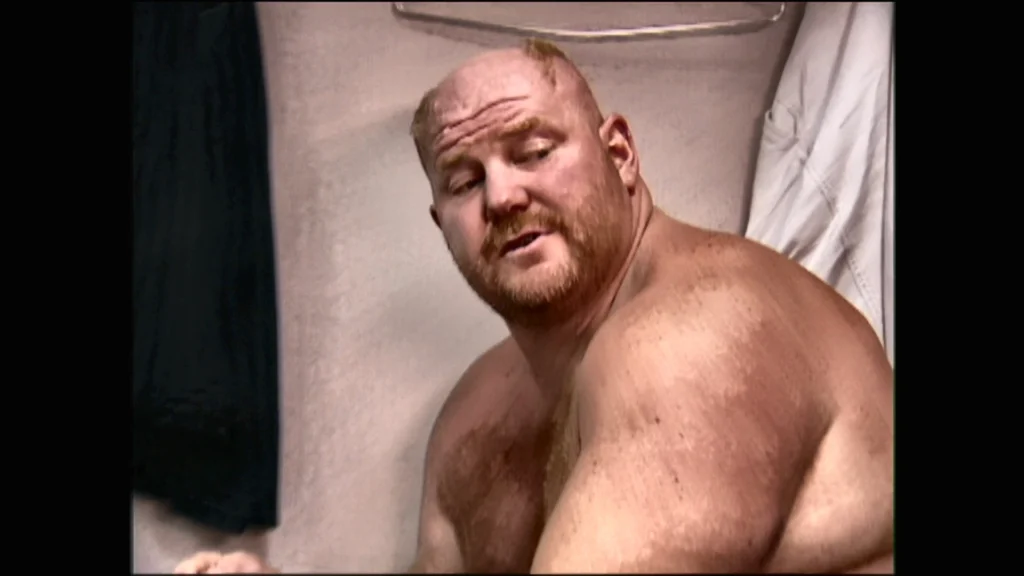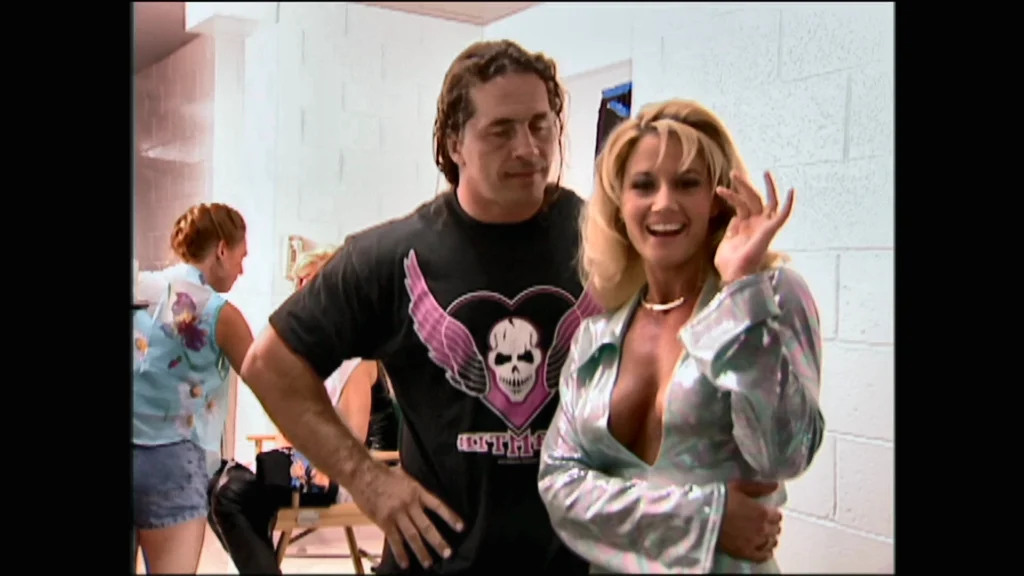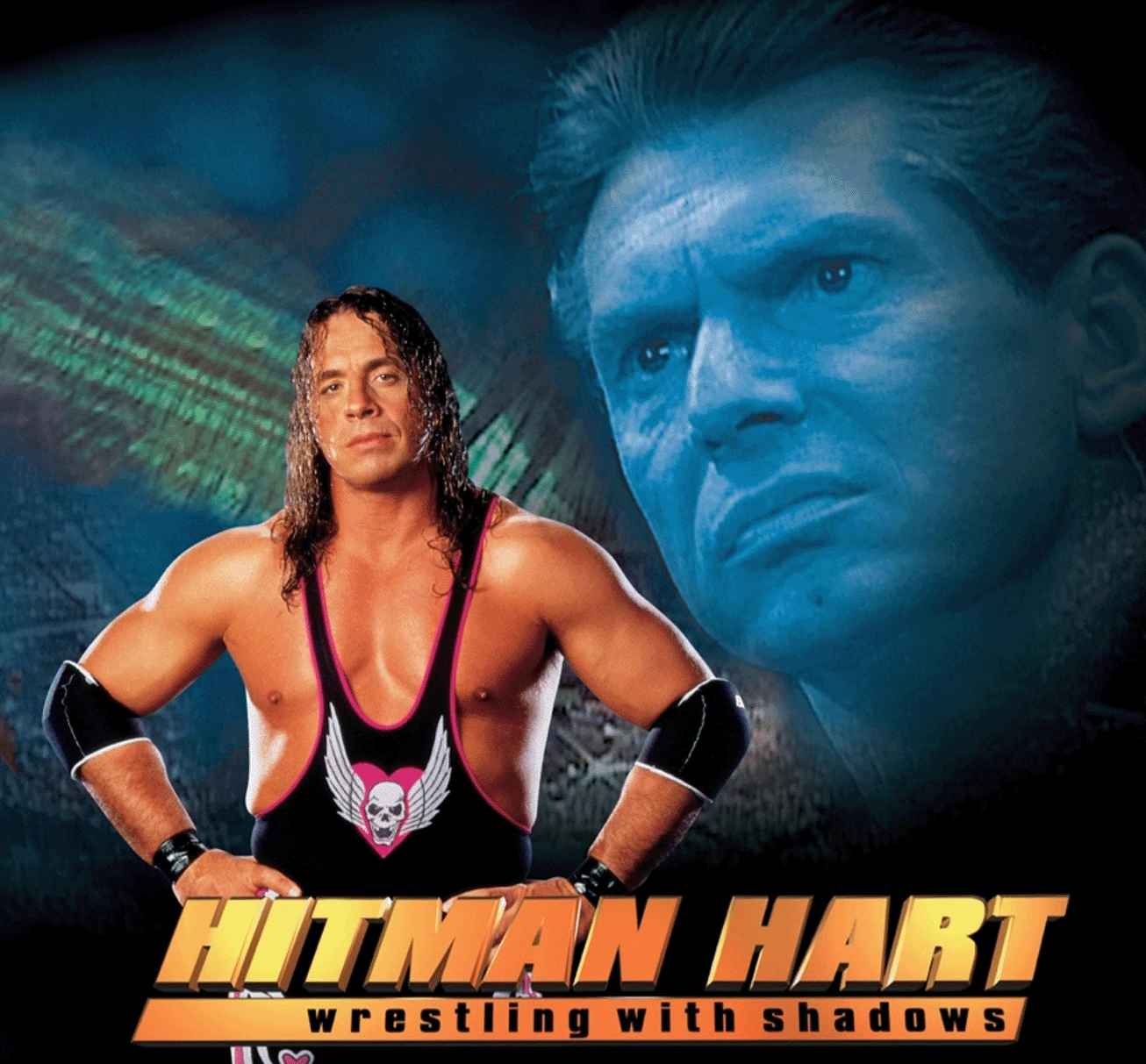
Bret Hart, five times champion of the WWF, sits in a hotel room one day before the most important fight of his life. Sure, it is just professional wrestling but this match is different. What Bret does not know is that he will be the target of the biggest double cross in the history of professional wrestling.

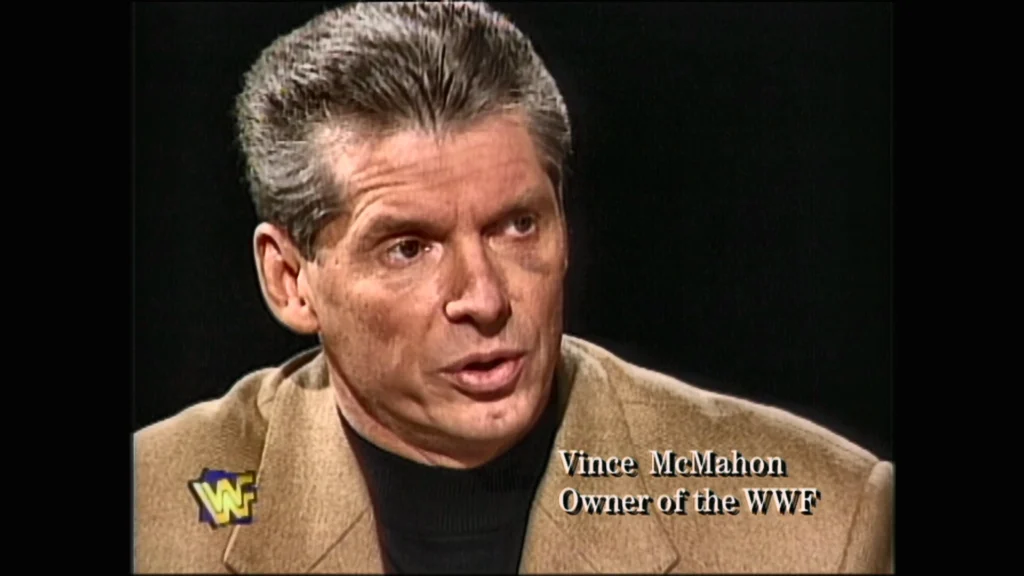
Bret Hart, five times' champion of the World Wrestling Federation, sits in a hotel room - one day before the most important fight of his life. Sure, it's just professional wrestling, but this match is different. It will be Bret's last in the WWF, a company for whom he's been the top guy and loyal champion for years. The owner of the company, the legendary Vince McMahon, want's him out, only months after signing an unprecedented twenty years contract.

Now he want's him to lose his final match as well. It's not just another wrestling show for Bret. This fight will determine how his character 'The Hitman', wrestling's favorite good guy for the last decade, will be remembered. Sitting in a hotel room, one day before the match. What Bret doesn't know, is that he will be the target of the biggest double cross in the history of professional wrestling.


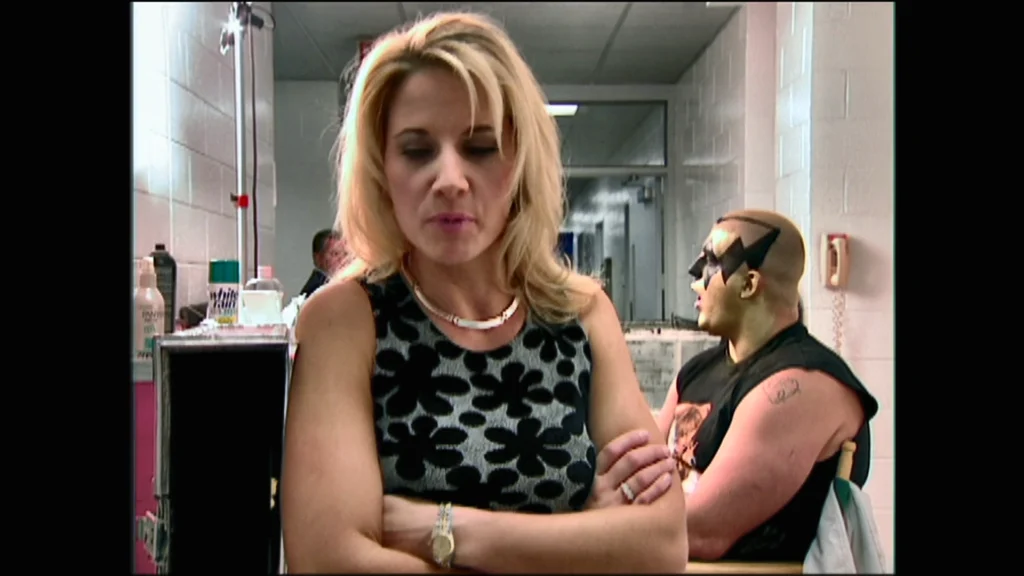
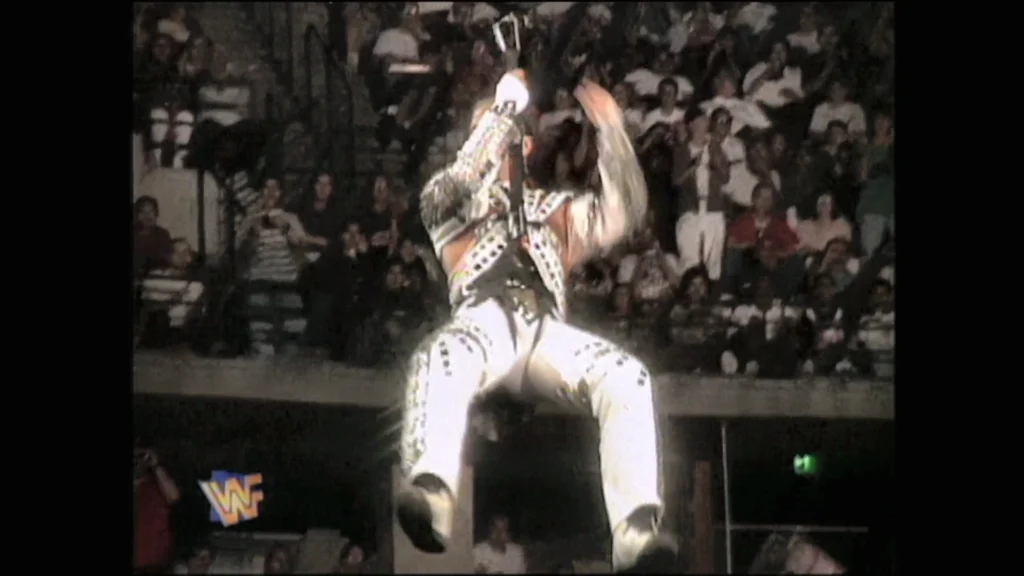
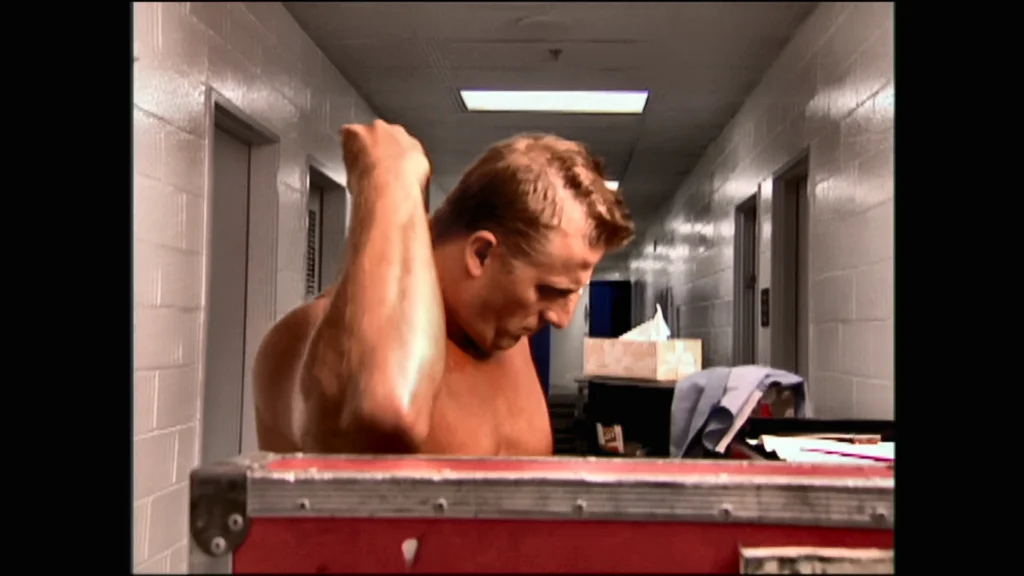
Over the span of one year, an award winning documentary film crew followed Bret Hart. They hoped for an unprecedented look behind the scenes of the WWF. What they got was the most dramatic story in the history of wrestling. HITMAN HART is a story about loyalty and betrayal, money and greed, dignity and disgrace. It's about fathers and sons, fans and icons, and keeping one's integrity in a world of moral uncertainty. In a word, it's a film about being human.
Chicago Tribune

"The temptation is to hail 'Hitman Hart: Wrestling with Shadows' as one of the best and most surprisingly resonant documentaries you will see, no matter where you look… Transcends the genre it pioneered… one of the best documentaries about anything ever."
— Steve Johnson, Tribune Television Critic — December 18, 1998

Newsweek

"One of the best films of 1998. Hall-of-mirrors trifles like This Is Spinal Tap, Natural Born Killers, The Truman Show, and The Matrix pale in comparison."
— Peter Plagens

Ottawa Citizen

"A tale as bizarre as Kafka and as tragic as Shakespeare… riveting."
— Tony Atherton

The Village Voice

"Classic tragedy of a modern hero… wildly entertaining and surprisingly thought-provoking… one of the most riveting and highly acclaimed Canadian films in years."
— Dennis Lim (later Director of Programming, Film Society of Lincoln Center)

TVOntario

"This film is so brilliant… so complex and so watchable and funny and profound at the same time… it could be the best documentary I've ever seen. It's Hamlet, transposed to our day and age."
— Ian Brown

New York Times

"Brilliant…"
— Charles R. Lyons, Professor of Drama and Comparative Literature, Stanford

Boston Herald

"Phenomenal… as gripping a documentary as you'll see."
— Paul Sherman

The Tennessean

"A wonderful film, full of suspense, dramatic tension and, given the subject, a strange kind of melancholy… If there's one film in the festival [Nashville Independent Festival] not to miss, it's this one."

The West Australian

"I sat mesmerized… a mind-boggling examination of middle America's desperate need for heroes and villains… art and life become deliciously confused."

Newsday (New York)

"Why does any of this matter? It matters if integrity and ideals matter. This is one whale of a tale. I was glued to the tube."

St. Louis Post-Dispatch

"The year's best documentary happened to debut on television (the A&E network), but that doesn't diminish its achievement one iota… kept me enthralled sitting at home on my couch."

Entertainment Weekly

"Artfully trenchant… revealing."
Rated ‘A’ — Pick of the Week

— "What to Watch"

Broadcast Week

"Had me surprisingly pinned to the sofa for 90 minutes… great entertainment."

LA Times

"An insightful and poignant portrait of a man's struggle to reconcile self-respect with the demands of show business… viewers are taken on a great ride."

Wall Street Journal

"Not a dull moment in 93 gruelling minutes of film."

Star Week

"I was pinned to the living-room couch for the entire length of Hitman Hart, Wrestling With Shadows. This is truly a knockout film."

Globe & Mail

"Paul Jay's extraordinary documentary takes viewers into the weird world of North American televised professional wrestling."

EYE Magazine

"It was a thought-provoking end to a story beautifully told… enthralling."

POV Magazine

"Jay captured the ferocity and comedy of wrestling as performed by Hart even during the infamous 'Montreal screwjob' in which McMahon betrayed the 'Hitman,' exposing the sport for what it is: venal, corrupt, and theatrical."
— Marc Glassman

The Independent (London)

"Jay's documentary is constructed like a dramatic film. The documentary's finale, centring on Hart's final WWF match, is as dramatic as that of most movies you'll see this year… terrific."

Hot Docs! 1999 Best Feature, Best of Festival
Gemini Awards '99 Winner Best History/Biography Doc.
Sundance Independent Film Festival 1999 Screening invitation
Slamdance Film Festival 1999 Special Screening
The International Emmy Awards '99 Finalist for Best Documentary
Banff Television Festival Rockie Award winner
Columbus Int'l Film & Video Festival 1999 The Chris Statuette
Canadian Association of Broadcasters' Awards Gold Ribbon
U.S. International Film and Video Festival Gold Camera Award
Nashville Independent Film Festival Awarded Best Documentary
Bangkok film festival '99 Screening invitation
Parnu Inter. Documentary Festival (Estonia) Screening invitation
Rhode Island International Film Festival Screening invitation
New York Documentary Festival 1999 Screening invitation
Canadian Society of Cinematographers Awards 1999 Awarded Best Doc. Cinematography
Worldfest International Film & Video Festival 1998 Gold Award
New York Festivals '98 Finalist
Sheffield International Documentary Festival 1998 Opening Gala
Amsterdam Documentary Film Festival 1998 Best of the Fest showcase
Sidewalk Moving Picture Festival 1999 Nominated for Best Documentary
It's All True Int'l Doc. Film Festival Rio de Janeiro Showcase
Sydney International Film Festival People's choice top ten films
Australian Int'l Documentary Conference Best of Current World Docs" showcase
Double Take Documentary Festival 1999 Screening invitation
INPUT 1999 Screening invitation
Hot Springs Documentary Festival Screening invitation
Denver International Film Festival Screening invitation
X Internacional Doc. Film Festival (Portugal) Screening invitation
Q&A with director, Paul Jay

Q: Your last film, Never-Endum-Referendum, dealt with a serious topic - nationalism and personal identity in Quebec. Why go from there to a film about professional wrestling?

Jay: I guess I could make the obvious joke (about the similarities between the two topics), but in fact, there are parallels. Firstly, in NER I tried to find a human, populist way to delve into a serious subject. In HITMAN HART, I wanted to deal with how we look at morality, at good and evil. Wrestling was a way to do that, again in a human and populist way. As everyone knows, wrestling is about good guys and bad guys.

Q: What attracted you to the Bret Hart story?

Jay: As a Canadian filmmaker, I'm always on the lookout for a story about one of our own who plays on the world stage. I wasn't really a wrestling fan, but I watched once in a while and knew that Bret was a big star. I saw an interview the WWF had done with him from Germany, and clearly the guy had amazing presence. At the time, he was thinking of quitting, and while the interview was a "work" (in wrestling terminology, part of a story line), the guy really seemed to be going through a crisis of some kind. It smelled like a story.

Then I discovered his family background. His father, Stu Hart, is a wrestling legend from Calgary, his mother Helen, a sophisticated New Yorker who hates wrestling with almost as much passion as Stu loves it. They had eight boys and four girls. All the boys became wrestlers and all four girls married wrestlers.

So, with a compelling and articulate subject, this wacky family story and unprecedented access behind the scenes of pro-wrestling, - I knew we had a movie. What I didn't know, is that the gods of documentary film would smile on us. We got all the elements we had hoped for, and then Bret's battle with Vince McMahon, the legendary owner of the WWF, broke out. We wound up in the middle of what's what's been called the "biggest double cross in the history of wrestling". A good story had become a classic drama.

Q: Did you start to take wrestling more seriously?

Jay: I have a lot of respect for mass taste. There is a reason why some things have a mass appeal, and I don't distance myself from those feelings. I don't sneer, even at a Jerry Springer. People want to hear other people's stories, and even if there is a morbid pleasure in seeing someone squirm on TV, the underlying attraction is people's need to understand their own stories. This quite natural desire gets exploited and misused (sometimes venting racism and chauvinism), but it doesn't mean there is anything wrong with what the mass audience is looking for.

So, I'd be zapping around the TV, hit wrestling and invariably I'd stop. There was something in this bizarre theatre that attracted me, even in the pseudo- violence. I'm not a fan of violent movies, I don't get turned on by graphic scenes of bullet hits. But once I really looked, I found that wrestling was a grand, modern day morality play. This was soap opera, melodrama, it was another way people were trying to explore their emotions - but on a mythic, grand scale populated by giants who personify basic human emotions.

Q: You have said you found the French philosopher, Roland Barthes useful.

Jay: I wanted to know more about what buttons wrestling was pushing. Barthes book titled Mythologies, is insightful. He said " The virtue of wrestling is that it is a spectacle of excess. Here we find a grandiloquence which must have been that of ancient theatres . . . Even hidden in the most squalid Parisian halls, wrestling partakes of the nature of great solar spectacles, Greek drama and bull-fights: in both, a light without shadow generates an emotion without reserve. What is portrayed by wrestling is an ideal understanding of things . . . wrestlers remain gods because they are, for a few moments, the key which opens Nature, the pure gesture which separates Good from Evil, and unveils the form of a Justice which is at last intelligible."

There is a lot in this quote, but one thing interesting is his idea "a light without shadow generates an emotion without reserve". When this was written (during the1950's), good guys were easy to understand. They played by the rules, stood up for what was right, never gave up, never ran away from a fight and never betrayed a friend. Bad guys did the opposite. The two forces would struggle against each other, and eventually, after overcoming all odds, the good guy would win and the fans would cheer wildly.

Not so anymore. In recent years, the light has been filled with shadows. As our shoot progressed, the shift in fan loyalty became apparent. The guys who cheated and were supposed to be evil, were getting cheered. A character like Bret Hart, the classic good guy, was starting to get booed. The stories were more complicated. This became an intriguing sub-plot of the film.

Q: Do you understand why this was happening?

Jay: It's a long discussion, but in short, people told us they were fed up with hypocrisy. They felt that good guys lie, cheat and steal - they just hide it. They pointed mostly to politicians to make their point. They liked a hero who at least came out and said what he wanted - to win at any cost. To not give "a shit" about anyone. To fulfill his own ego, and be willing to stomp over anyone in his way. The cheering for a guy like "Stone Cold" Steve Austin was a kind of rebellion, a "we're fed up and not going to take it anymore". Of course, this kind of emotion carries within it seeds of chauvinism and fascism. Austin also became the symbol of the working man finally taking charge. Not in any collective way, but on his own, not needing anybody. In the States, this was identified with America being number one, the best country on earth. Love it or leave it.

As the film unfolds, Bret turns "bad", at least in the United States. He starts a "war with America" where he attacks the American fans for cheering the bad guys. In Canada, Bret becomes a figure standing against American arrogance, and upholding "Canadian" values. It's another form of chauvinism, but perhaps a little more benign.

The fans had great fun with the rivalry. I doubt if Canada has ever had such an impact on the American popular psyche.

Q: The main story is about Bret's real life struggle with Vince McMahon, the owner of the WWF. How did this develop?

Jay: Bret had wrestled for his father in Calgary in the early 1980's. In '84, Stu sold the promotion to Vince and the WWF. Bret, his brother Owen and brother-in-laws Davey "The Bulldog" Smith, and Jim "The Anvil" Neidhart, all went to the WWF as part of the deal. Over the next decade, Bret rose to become the biggest star in wrestling, taking over the mantle of top guy in the WWF from Hulk Hogan. In the summer of 1997, Bret's contract with the WWF was up, and he was a free agent of sorts.

The rival WCW made Bret a big offer to jump from the WWF. The WCW, owned by Ted Turner, was involved in a bitter war with the WWF for control of the multi- billion dollar wrestling market. After a lot of soul searching, Bret turned down 9 million dollars US over three years to stay with Vince. His deal was for a lot less money, but with an unprecedented twenty year contract.

There were two main reasons for staying. One was loyalty to Vince, who had become like a surrogate father. Bret had grown up in fear of Stu, a stern disciplinarian who was a master in the martial art of submission wrestling, and wasn't adverse to using it when his sons got out of line. Vince became the only other boss Bret had known, and he rose to stardom on the stage Vince created. Winning the approval of his father and then Vince, was a driving force in Bret's life.

The other reason for staying had to do with Bret's wrestling character, "The Hitman". He was a bonafide hero, loved by people around the world. He was voted most popular athlete in Europe three years in a row by Bravo magazine readers in Germany, and adored by kids and adults from India to South Africa. In Canada he was a national icon for fans, and one of the biggest names wrestling had known in the United States.

Bret took all of this seriously. He believed in his character and what he stood for. He believed he had a responsibility to his fans that went beyond the normal platitudes. He loved his fans, and he loved being loved by them. There are stories of kids who died of cancer, their final wish to be buried with a Bret Hart doll in their coffin.

For Bret, this relationship with his fans was worth more than money, and he believed that in the WWF "this great story" would come to a glorious end. Bret would go out a hero, gracefully handing over the mantle of champion to a deserving successor. He feared if he went to the WCW, his character would lose its focus, and his fans.

Eight months into the new deal, Vince told Bret he couldn't afford the new contract and that he should try to get his deal back with the WCW. This was after Vince had engineered the Canada vs US story line, taking Bret's hero status in the States away from him. Believing he had no choice, Bret made the deal and prepared to leave, heart broken at the prospect.

Vince had found that Bret's run as a classic good guy was waning. People were tired of good guys. He resented the deal he struck with Bret under the pressure of the WCW. By pushing Bret out, he sent a powerful message to the other WWF wrestlers. Don't try to leverage yourself against the WWF. He was going to prove that the WWF was bigger than any single wrestler, even the top guy. For Vince it was about the bottom line, about who holds the power.

Feeling betrayed and lied to by McMahon, Bret's focus turned to the final match. Hart had negotiated a unique clause in his separation agreement. For the last thirty days, he would have "reasonable creative control". This was to prevent Vince from trashing his character on the way out of the federation. As they headed towards "The Survivor Series", a big pay-per-view event in Montreal, McMahon insisted that Bret lose his championship title at what would prove to be his last match in the WWF.

Hart refused, saying he wouldn't lose in Canada, the one place he was still a hero. It had to do with the fans who loved him, and would be devastated by a loss in his own country. It also had commercial considerations, as the WCW wanted Hart partly because he could open up the Canadian market in which they had been weak.

Bret offered to lose the following week, at a match in New York. Vince insisted it be done in Montreal, saying he couldn't risk Hart turning up on the WCW TV show with the WWF belt. They were on a collision course, neither man backing down.

When they got to Montreal, Vince did an about face and agreed with Bret's plan for the match. The end would be a "shamozz", a run in by other wrestlers that would cause a disqualification and thus no change in the status of the championship. The next night, Bret would thank Vince for the good years and voluntarily forfeit the belt.

When the match was half way, Bret was in a submission hold he was supposed to break. Vince arranged with the referee to call for the bell, saying Bret gave up. It ended the match and a new world champion was crowned. In the theatre of wrestling, where scripted double crosses are considered part of the repertoire, this was the real thing.
Q: It's a great story. What meaning does it hold for you?

Jay: The question that always intrigued me as we were filming goes like this: in a world where good and evil does not exist (in the simplistic terms we have known in the past, or in some abstract pure form), does it mean that there is no right and wrong? It seems to me that in the last decade the bottom line has become the only measure of morality. Everything else is considered naive. Vince considers Bret naive for his belief in heros. Heros are something Vince manufactures for profit. Of course there is some truth to this, Bret "The Hitman" Hart didn't save anyone from a burning building. But in real life, at least in his relationship with Vince and his fans, he kept his word. He did what he said he would do, he maintained a sense of personal integrity, even if he lived in a world where the truth exists only to serve an interest. In this way, the struggle between these two men reflects what I believe is the great battle of our time. It is a fight over ideals, whether life is going to be about more than making money.

Q: Does the real Bret Hart really stand for these things? How much is this an idealized portrait of him?

Jay: There is a line where this documentary crosses over into drama. It's not a piece of journalism. We didn't investigate Bret's whole life to see if he is a worthy hero or not. In our film, like in a drama, he represents the yearning for the positive hero. It's not meant to be a biographical piece.

Still, it is a documentary and we aren't as free as we would be in a drama. If we had found that Bret was a shit, we would have made a different film. The character you see in the film, is pretty much the man we came to know.

People can decide for themselves what to make of Bret. While the film is told from Bret's point of view, I don't think people judge others by what they say about themselves. Many viewers, at the end of the film, will think that Bret was naive and self-serving, and that Vince was right to take the steps he did. I guess people will split over this, the way they do about what's going on in our society. I hope people debate it.

Q: The film ends with the death of "The Hitman" character. Does that mean you are pessimistic about our future?

Jay: It is a real story, and we had to tell it as it happened.

I'm not pessimistic, although it would be easy to be so when one looks around the world these days. I do think the pendulum is ready to swing the other way, that people are questioning the fundamental assumptions of our society in a way I haven't heard for a long time. So in that way, I remain optimistic.

This discussion may seem a bit much coming out of a wrestling movie, but as Bret says in the film, "you don't sell out really cheap and just go, 'Okay, it's just a wrestling show'. I've learned that it's not just a wrestling show."

Add comment

Your email address will not be published. Required fields are marked *